
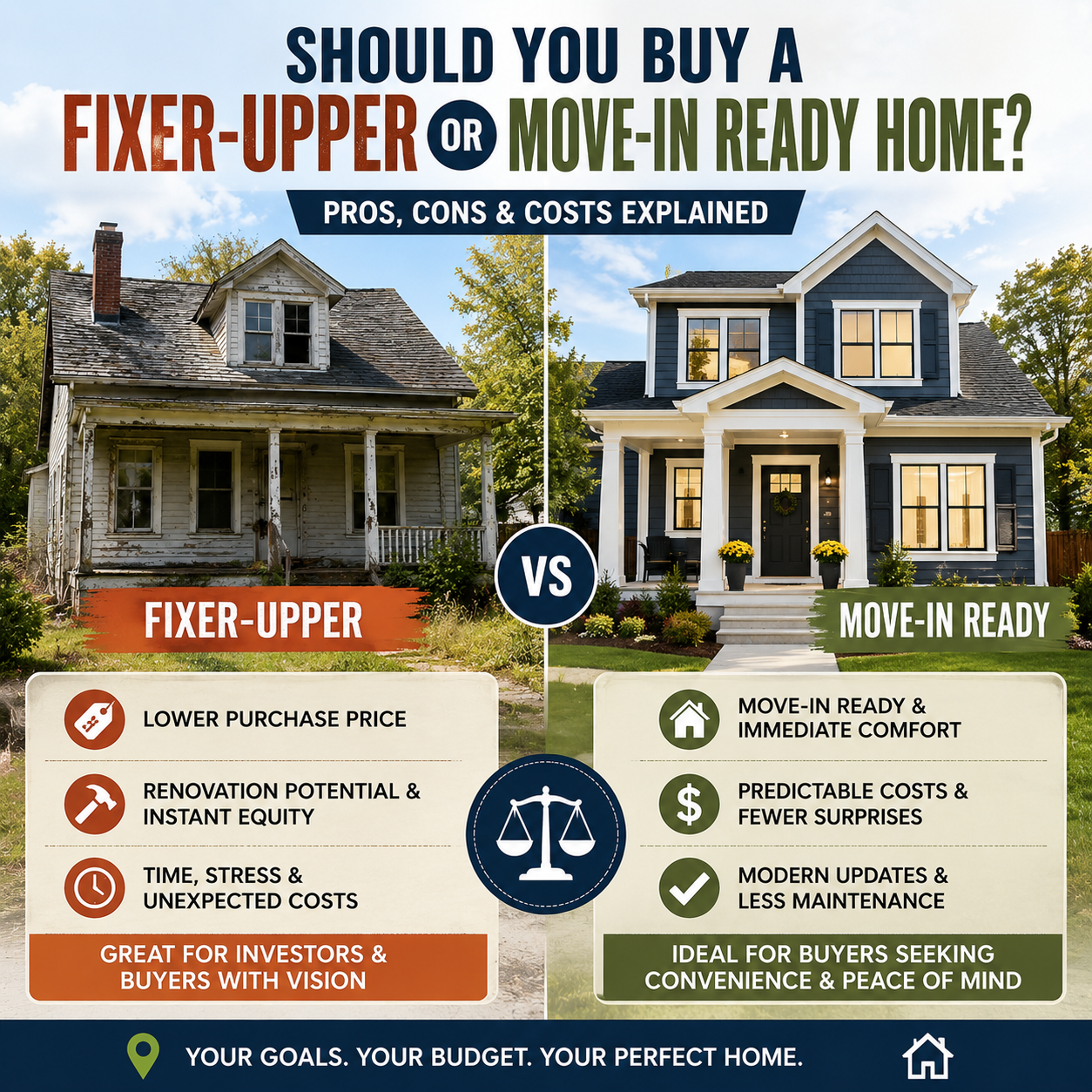
Should You Buy a Fixer-Upper or a Move-In Ready Home?
One of the biggest decisions home buyers face is whether to purchase a fixer-upper or a move-in ready home. While both options can lead to successful homeownership, the right choice depends on your budget, timeline, lifestyle, and long-term goals.
In Massachusetts, where housing inventory can be limited and home prices remain competitive, many buyers are considering properties that need repairs as a way to enter the market. Others prefer the convenience and peace of mind that comes with a move-in ready property.
Before making a decision, it’s important to understand the advantages and challenges of each option.

🔨 What Is a Fixer-Upper?
A fixer-upper is a home that requires repairs, updates, or renovations before it reaches its full potential.
The needed improvements may range from cosmetic updates such as painting and flooring to major projects involving roofing, plumbing, electrical systems, or structural repairs.
Because these homes often need work, they are typically priced lower than similar move-in ready properties.
💰 Advantages of Buying a Fixer-Upper
Lower Purchase Price
One of the biggest benefits of a fixer-upper is the lower upfront cost.
Since many buyers are hesitant to take on renovation projects, sellers often price these homes below market value.
This can create opportunities for buyers with limited budgets.
Potential for Instant Equity
By completing renovations, homeowners may increase the property’s value significantly.
In some cases, strategic improvements can create equity almost immediately.
Common value-boosting upgrades include:
✔ Kitchen renovations
✔ Bathroom updates
✔ New flooring
✔ Fresh paint
✔ Energy-efficient improvements
Less Competition
Move-in ready homes often attract multiple offers.
In contrast, fixer-uppers typically receive less attention, giving buyers more negotiating power.
⚠️ Disadvantages of Buying a Fixer-Upper
Unexpected Costs
Renovation projects frequently cost more than anticipated.
Hidden problems may include:
❌ Outdated electrical systems
❌ Plumbing issues
❌ Foundation concerns
❌ Water damage
❌ Mold remediation
Therefore, buyers should maintain a renovation budget and emergency reserve fund.
Time Commitment
Repairs and remodeling can take weeks or even months.
Buyers who need immediate housing may find this timeline challenging.
Construction Stress
Managing contractors, permits, inspections, and project schedules can be overwhelming, especially for first-time homeowners.
🏠 What Is a Move-In Ready Home?
A move-in ready home is a property that is immediately livable with little or no work required.
These homes often feature updated systems, modern finishes, and fewer maintenance concerns.
As a result, buyers can move in shortly after closing.

✨ Advantages of Buying a Move-In Ready Home
Immediate Comfort
The biggest benefit is convenience.
Buyers can focus on settling into their new home rather than coordinating repairs and renovations.
Predictable Expenses
Because major systems are often updated, move-in ready homes typically involve fewer surprise costs during the first few years of ownership.
Easier Financing
Lenders generally prefer homes in good condition.
As a result, financing approval is often simpler and faster for move-in ready properties.
⚠️ Disadvantages of Buying a Move-In Ready Home
Higher Purchase Price
Convenience comes at a cost.
Move-in ready homes are usually priced higher because buyers are paying for completed upgrades and modern features.
Increased Competition
In popular Massachusetts communities, updated homes often receive multiple offers, creating bidding wars and driving prices higher.
Limited Customization
When someone else has already completed the renovations, the design choices may not match your personal taste.
You may still end up remodeling later to achieve your preferred style.
📊 Which Option Makes More Financial Sense?
The answer depends on your goals.
A Fixer-Upper May Be Better If You:
✔ Have renovation experience
✔ Have access to reliable contractors
✔ Want to build equity quickly
✔ Have flexible move-in timelines
✔ Enjoy customization projects
A Move-In Ready Home May Be Better If You:
✔ Need immediate occupancy
✔ Prefer predictable costs
✔ Have limited renovation experience
✔ Want minimal stress after closing
✔ Have sufficient budget for a higher purchase price
🔍 Questions to Ask Before Choosing
Before deciding, consider the following:
Budget
Can you comfortably afford renovation costs beyond the purchase price?
Time
Are you willing to spend months managing repairs?
Financing
Will your lender approve financing for the property’s condition?
Lifestyle
Do you enjoy home improvement projects or prefer convenience?
Long-Term Goals
Are you buying your forever home or looking for an investment opportunity?
📍 Massachusetts Market Considerations
In Massachusetts, many older homes offer tremendous character and charm but may require updates.
Historic homes throughout communities such as Worcester, Springfield, Lowell, and parts of Greater Boston can present excellent opportunities for buyers willing to invest in renovations.
However, labor costs and permitting requirements should always be considered when evaluating potential projects.
Working with a knowledgeable local real estate professional can help identify properties that offer strong value without becoming overwhelming renovation challenges.
🎯 Final Thoughts
There is no universal answer to the fixer-upper versus move-in ready debate. Both options offer unique advantages and challenges.
A fixer-upper can provide affordability, customization, and equity-building opportunities, while a move-in ready home offers convenience, predictability, and immediate comfort.
The best choice depends on your financial situation, available time, risk tolerance, and homeownership goals. By carefully evaluating your needs and working with an experienced real estate agent, you can make a confident decision that supports your future success.


First-Time Home Buyer Guide for Massachusetts in 2026 Buying your first home is an exciting milestone, but it can also feel overwhelming. Between choosing the right neighborhood, understanding mortgage options, and preparing for closing costs, first-time buyers often have many questions. Fortunately, Massachusetts offers a Read more

How to Get Pre-Approved for a Mortgage in Massachusetts If you're planning to buy a home in Massachusetts, one of the smartest first steps is getting pre-approved for a mortgage. In today's competitive real estate market, sellers often favor buyers who already have financing lined Read more

FHA vs Conventional Loans: Which Is Better in Massachusetts? Buying a home is one of the biggest financial decisions you'll ever make, and choosing the right mortgage is just as important as finding the perfect property. If you're planning to purchase a home in Massachusetts, Read more
What Is Fix and Flip? A Complete Guide to Flipping Houses and Its Benefits Fix and flip is a real estate investment strategy where an investor purchases a property that needs repairs or renovations, improves it, and then sells it for a profit. Rather than Read more