
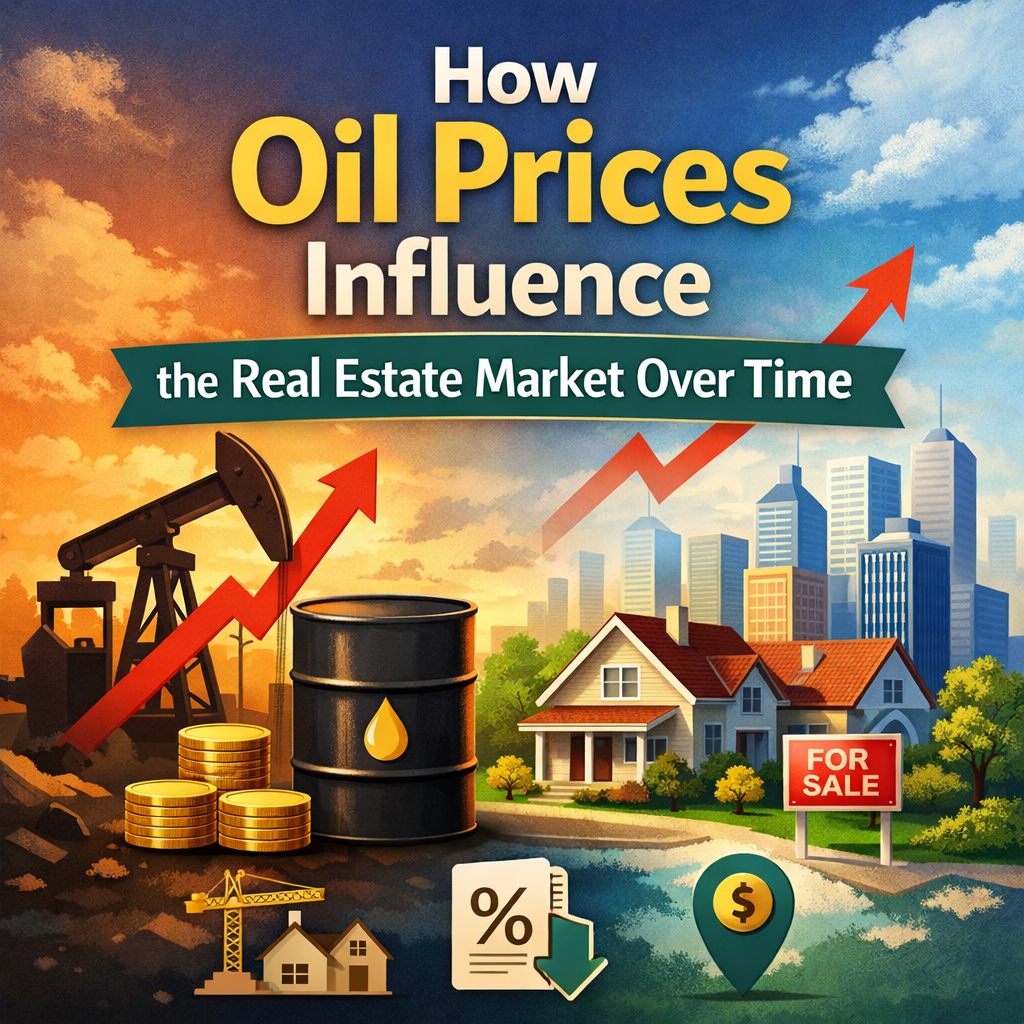
How Oil Prices Influence the Real Estate Market Over Time
At first glance, oil prices and real estate may seem unrelated. However, when you look deeper, the connection becomes clear. Oil is a fundamental driver of the global economy, and therefore, fluctuations in oil prices can significantly influence the housing market over time.
In fact, from construction costs to mortgage rates, oil prices play a more important role than many buyers and investors realize. So, understanding this relationship can help you make smarter real estate decisions.
📈 The Link Between Oil Prices and the Economy
To begin with, oil prices directly affect the overall economy. When oil prices rise, transportation and production costs increase. As a result, goods and services become more expensive, leading to inflation.
Consequently, central banks may raise interest rates to control inflation. This, in turn, impacts mortgage rates, making home loans more expensive for buyers.
On the other hand, when oil prices fall, the opposite tends to happen. Lower energy costs reduce inflationary pressure, which can lead to lower interest rates and more affordable financing options.
 How Oil Prices Influence the Real Estate Market Over Time
🏗️ Construction Costs and Housing Supply
Another important factor is construction. Since oil is essential for manufacturing materials and transporting them, higher oil prices often increase building costs.
For example:
- 🚛 Transportation of materials becomes more expensive
- 🧱 Production of cement, steel, and asphalt costs more
- ⚒️ Labor costs may rise due to increased operational expenses
As a result, developers may slow down new projects. Consequently, housing supply decreases, which can drive property prices higher over time.
Conversely, when oil prices are lower, construction becomes more affordable. Therefore, developers are more likely to build, increasing supply and stabilizing prices.
🚗 Location Preferences and Commuting Costs
In addition, oil prices strongly influence where people choose to live. When fuel prices rise, commuting becomes more expensive.
Because of this, many buyers prefer homes closer to work or in urban areas with access to public transportation. As a result:
- 🏙️ Urban property values may increase
- 🚆 Transit-oriented developments become more desirable
- 🌄 Suburban or rural properties may lose some appeal
However, when oil prices drop, commuting becomes more affordable. Therefore, buyers may be more willing to move farther away, increasing demand in suburban areas.
💰 Inflation and Property Values
Moreover, oil prices are closely tied to inflation. When oil prices increase, inflation often follows.
Interestingly, real estate is often seen as a hedge against inflation. Therefore, during periods of rising oil prices and inflation:
- 📊 Property values may increase
- 🏠 Rental income may rise
- 💼 Investors may turn to real estate for stability
Nevertheless, higher interest rates can offset these benefits by reducing affordability. So, the overall impact depends on the balance between inflation and borrowing costs.

📉 Interest Rates and Mortgage Affordability
Equally important, oil prices indirectly affect mortgage rates. As mentioned earlier, rising oil prices can lead to inflation, prompting higher interest rates.
Consequently:
- 📉 Mortgage affordability decreases
- 🛑 Home sales may slow down
- 💵 Buyers may reduce their budgets
In contrast, falling oil prices can help keep interest rates low. As a result, borrowing becomes cheaper, which can stimulate demand in the housing market.
🌍 Regional Impacts: Not All Markets React the Same
It is also important to note that oil price changes do not affect all regions equally.
For instance:
- 🛢️ Oil-producing regions may benefit from higher oil prices due to job growth and increased income
- 🏭 Industrial areas may face higher costs, slowing economic activity
- 🏖️ Tourism-driven markets may be affected by travel costs linked to fuel prices
Therefore, real estate trends can vary significantly depending on the local economy.
🔮 Long-Term Trends and Investment Strategies
Over time, the relationship between oil prices and real estate becomes even more complex. While short-term fluctuations can create volatility, long-term trends often shape investment strategies.
For example:
- 🌱 The shift toward renewable energy may reduce dependence on oil
- 🚗 Electric vehicles could change commuting patterns
- 🏙️ Urban planning may evolve to reduce transportation costs
Because of these changes, investors who monitor energy trends are better positioned to anticipate shifts in the real estate market.
✅ Conclusion
In summary, oil prices have a far-reaching impact on the real estate market. From influencing construction costs and mortgage rates to shaping where people choose to live, energy prices play a critical role over time.
Therefore, whether you are a buyer, seller, or investor, paying attention to oil price trends can provide valuable insights. Ultimately, understanding these connections allows you to make more informed and strategic real estate decisions.

🏠 What to Look for When Buying a House: 10 Major Red Flags Buying a home is one of the biggest financial decisions you’ll ever make. However, while a property may look perfect on the surface, hidden issues can quickly turn your dream home into Read more

First-Time Home Buyer Tips in Massachusetts: A Complete Guide Buying your first home is an exciting milestone, but it can also feel overwhelming—especially in a competitive market like Massachusetts. From understanding financing options to navigating the local housing market, first-time buyers need the right information Read more

What Can We Realistically Expect from the US Real Estate Market in 2026? The US housing market has experienced dramatic shifts over the past few years. From record-low mortgage rates during the pandemic to rapid rate increases and affordability challenges, buyers and sellers alike are Read more

Is it worth hiring a real estate agent to rent or sell a property? If you’re thinking about renting or selling your property, one of the biggest decisions you’ll face is whether to hire a real estate agent or handle the process yourself. While going Read more